Educational content only. Not medical, therapeutic, or health services. Auckland, New Zealand.
Body Awareness

Understanding Your Postural Patterns

Posture is not about "sitting perfectly straight." It's about learning to notice your body, recognising comfort and tension, and making intentional choices about position throughout your day.

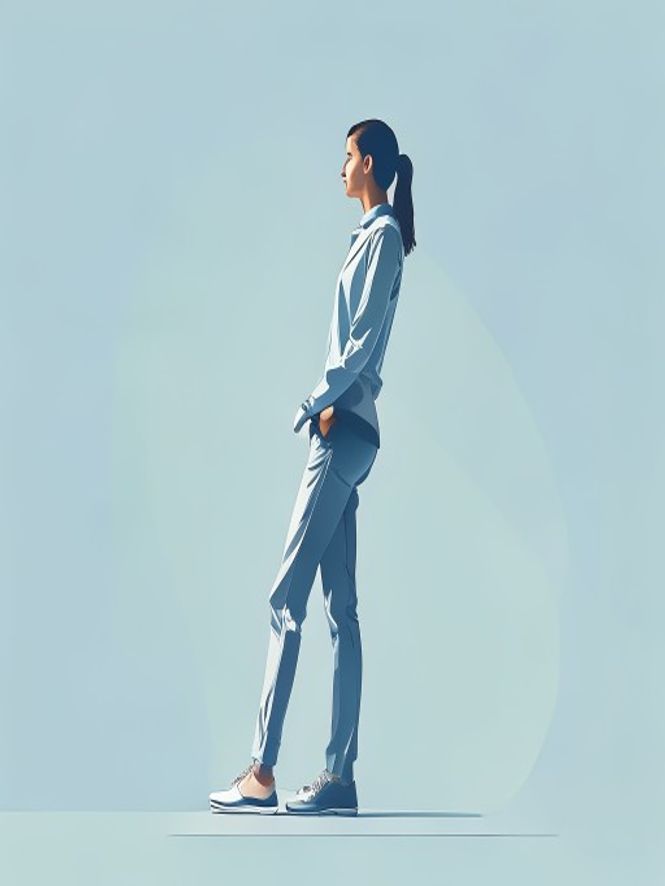
Illustration of neutral spine alignment and comfortable desk posture positioning

Building Postural Awareness

Awareness comes before change. Learning to notice your own patterns—without judgment—is the foundation of sustainable comfort.

1

Notice Without Judgment

Throughout your day, occasionally pause to notice your posture: Where are your feet? How are your shoulders sitting? Is your head forward, back, or neutral? Observation without trying to "fix" anything is the starting point.

2

Sense Your Comfort

Notice areas of tension or ease. Does a particular position feel restful or strained? Your body gives you information. Learning to listen to those signals is key to finding what works for you.

3

Explore Variation

Try slightly different positions—shoulders back, head upright, spine lengthened—and notice how each feels. You're not looking for one "perfect" posture; you're discovering your own comfortable range.

4

Practice Frequent Changes

Rather than holding one position, intentionally change your posture every 15–30 minutes. Variety in position supports circulation and prevents fatigue from static positioning.

5

Connect Posture to Movement

Posture and movement go together. Micro-movements—shifts, stretches, standing—support postural awareness and prevent stiffness. Awareness grows through variation.

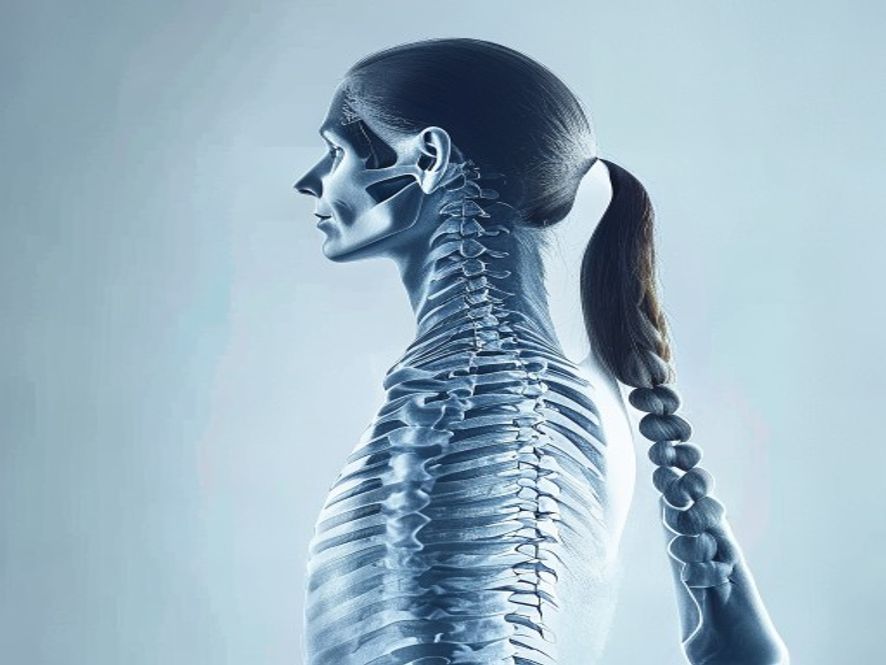
Diagram showing neutral spine alignment from side view with key positioning points marked

Neutral Positioning

A neutral spine is a foundational concept. It doesn't mean perfectly straight—it means your spine is in its natural S-curve, neither excessively flexed nor extended.

Key Elements

  • Feet flat on floor or footrest, with hip and knee angles near 90°
  • Pelvis aligned (not tilted forward or back)
  • Spine in its natural curve, not forced straight
  • Shoulders relaxed away from ears
  • Head balanced over shoulders, not jutting forward
  • Elbows at roughly 90° when typing

These are guidelines, not rules. Your neutral position may vary based on your unique body, environment, and needs.

Common Postural Patterns

Many desk workers develop similar patterns. Recognising your own helps you make intentional adjustments.

Forward Head Position

What it is: Head and neck shifted forward, often from looking down at devices or screens.

Common triggers: Monitor too low, phone use, concentrated focus.

Awareness practice: Notice when this happens. Is your screen positioned optimally? Can you gently draw your chin back to neutral?

Rounded Shoulders

What it is: Shoulders rolled forward, often with upper back slightly rounded.

Common triggers: Typing, tension, sustained focus.

Awareness practice: Occasionally roll shoulders back and down. Notice the difference. Gentle shoulder movement supports awareness.

Lower Back Flattening

What it is: Lumbar spine losing its natural curve, often from sitting deep in a chair or slouching.

Common triggers: Long sitting sessions, comfortable chairs that pull you deep.

Awareness practice: Notice your lower back. A small lumbar roll or sitting upright restores natural curve. Change position frequently.

Legs and Feet Tension

What it is: Feet not supported, legs crossed, or tense lower body from upper body focus.

Common triggers: No footrest, rushing, stress.

Awareness practice: Check foot position regularly. Flat feet, footrest support, or standing pauses reduce lower-body tension.

Body Signals and What They Might Tell You

Signal Possible Meaning Possible Adjustment
Neck tension Monitor too low, forward head, stress Raise monitor, gentle neck stretches, pauses
Shoulder tightness Rounded shoulders, tension, keyboard/mouse height Shoulder rolls, adjust workspace height, movement breaks
Low back discomfort Loss of lumbar curve, prolonged sitting, chair support Lumbar support, standing pauses, postural shifts
Wrist or hand fatigue Keyboard/mouse positioning, repetitive strain Adjust keyboard height, wrist stretches, frequent pauses
Hip or leg stiffness Prolonged sitting, leg position, limited movement Standing breaks, hip stretches, position changes
General fatigue Sustained static position, tension, reduced circulation Frequent micro-pauses, standing, walking breaks

These are general observations. If you experience persistent pain or discomfort, consult a healthcare professional. Our guidance is educational and informational.

Developing Your Personal Practice

Posture awareness is a skill you develop over time, not something you "get right" and maintain. The goal is building your capacity to notice, explore, and adjust—not achieving perfect form.

Simple Daily Practice

  • Throughout your workday, pause 3–4 times to briefly notice your posture
  • Explore one small adjustment (shoulders, head, spine curve)
  • Stand or move for 1–2 minutes
  • Notice how your body feels as you adjust
  • Over weeks, patterns will become clearer and changes more natural

Posture & Postural Awareness FAQ

No. While neutral positioning offers guidelines, the "correct" posture is the one that feels comfortable for your body and allows you to function well. Variation in position throughout the day is more important than holding one perfect form.

Posture awareness and movement can be supportive factors in comfort, but they're not a cure for pain. If you experience persistent pain, consult a healthcare professional. Our guidance is educational, not medical.

Posture awareness can complement your own practice, but it's not a replacement for professional care. Always consult your healthcare provider about what adjustments are appropriate for your condition.

Most people notice shifts in awareness within days or weeks of consistent practice. Real change—building habits and sustainable awareness—typically takes 4–8 weeks. Consistency matters more than intensity.

Not necessarily. Posture is about finding comfortable positions that work for you, not fixing yourself. If you're not experiencing discomfort, awareness and variety are the main goals.

Develop Your Postural Awareness With Our Programmes

Join our group or 1-on-1 sessions for personalized guidance.

Get Started